



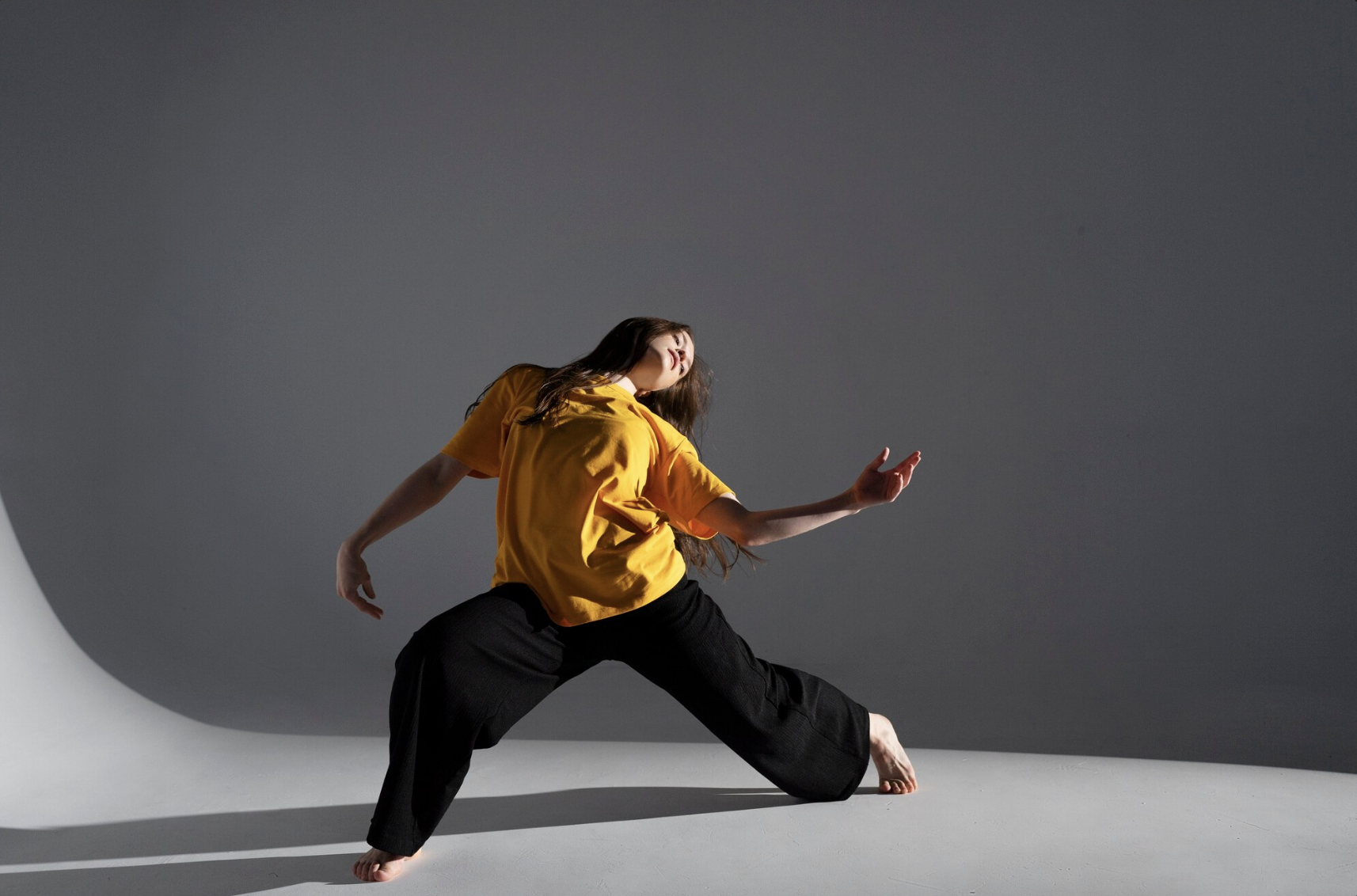
In any Western dance style, posture is the silent language of the floor. It’s the difference between looking like you’re ‘doing’ the steps and truly embodying the dance.
We spend our days hunched over keyboards, steering wheels, and smartphones, only to walk into a studio and be told to “stand tall.”
Whether you are refining your ballet line or tightening your frame for a social dance swing, correcting poor habits starts with a shift in body awareness. Here is how to shed the ‘modern slouch’ and build a professional-grade frame suited for any western dance style.
Contents
The Foundation: Daily Alignment Drills
The biggest hurdle to better posture is a lack of body awareness. We often don’t realize our head is jutting forward or our shoulders are creeping toward our ears until we see ourselves in a mirror. To fix this, you need to recalibrate your internal “level.”
The Wall Test
One of the most effective ways to find your “plumb line” is the classic wall drill. Stand with your back against a flat wall. Your heels, hips, shoulder blades, and the back of your head should all touch the surface lightly.
Pro Tip: Imagine a silver string attached to the crown of your head, pulling you toward the ceiling while your feet remain grounded.
Once you feel that length, step away from the wall while trying to hold that sensation. This isn’t a “static” pose; it’s an active stretch of the spine.
The Shoulder Reset
To release the “slouching” habits of a desk job, practice shoulder rolls daily. Inhale as you bring your shoulders up to your ears, then exhale as you drop them back and down.
This opens the chest and sets your shoulder blades into their “pockets,” providing a stable base for any western dance frame.
Core and Shoulder Activation: The Engine Room
Your posture is only as strong as your core. In social dance swing, the connection between partners happens through the frame, but the frame is powered by the torso.
Neutralize the Pelvis
A common pitfall is “swayback” (anterior pelvic tilt), where the lower back arches excessively, and the tailbone points backward.
This breaks the line of the body and makes it impossible to engage your core.
- Try “butt bridges.” Lie on your back with your knees bent and lift your hips while squeezing your glutes. This helps realign the hips and strengthens the posterior chain.
- Focus on a “neutral tuck.” Your pelvis should be like a bowl of water that you don’t want to spill out the front or the back.
Opening the Front Body
Because we live in a forward-facing world, our pectoral muscles are often tight. To fix this, lie on your back with your arms wide in a “T” position. Squeeze your shoulder blades together to open the chest.
This prevents the “caved-in” look that many beginners struggle with when they first start learning a Western dance style.
Partner Frame Fixes: Connecting the Dots
In social dance swing, your frame is your communication wire. If the wire is slack, the message gets lost. If it’s too rigid, it’s like shouting at your partner.
- For Leaders: Your left arm should maintain a 90-degree bend, with the elbow pointing to the side rather than dropping toward your ribs. Keep your fingers curled lightly; avoid the “death grip,” as tension in the hands travels straight to the shoulders.
- For Followers: Match the leader’s energy by keeping a lifted sternum. A great drill is the “Raise the Roof” exercise. Hold a towel overhead, lift your frame, and then pull the towel down using your back muscles (the lats). This teaches you to hold your arms up using your back rather than your neck.
Practice Integration: Staying Consistent
It’s easy to stand tall when you’re standing still. The challenge is keeping that posture while moving across the floor.
- Mirror Checks: Mid-class, do a quick “scan.” Are your eyes forward (not looking at your feet)? Are your ribs closed, or are they flaring out?
- Slow Walks: Practice walking across the room, emphasizing a full foot roll. This builds the endurance needed to maintain posture throughout an entire three-minute song.
- Tailbone Down: Always remind yourself to keep the tailbone pointing toward the floor. This stabilizes the lower back and keeps your center of gravity where it belongs.
Your Next Steps
Mastering posture is a marathon, not a sprint. The goal is to move from “conscious effort” to “unconscious habit.” The more you practice these drills at home, the more natural they will feel during a high-energy social dance swing or a graceful western dance style performance.